Sleep Ritual · Brainwave Science · Full Transparency
Binaural Beats for Sleep: A Complete Guide
Why your mind won’t quiet at 2 AM — and how a gentle frequency, used as ritual, can invite the rest your body already knows.
12 min read · Delta & Theta frequencies · No hype, no hidden claims
The Restless Night
When the Quiet Never Comes
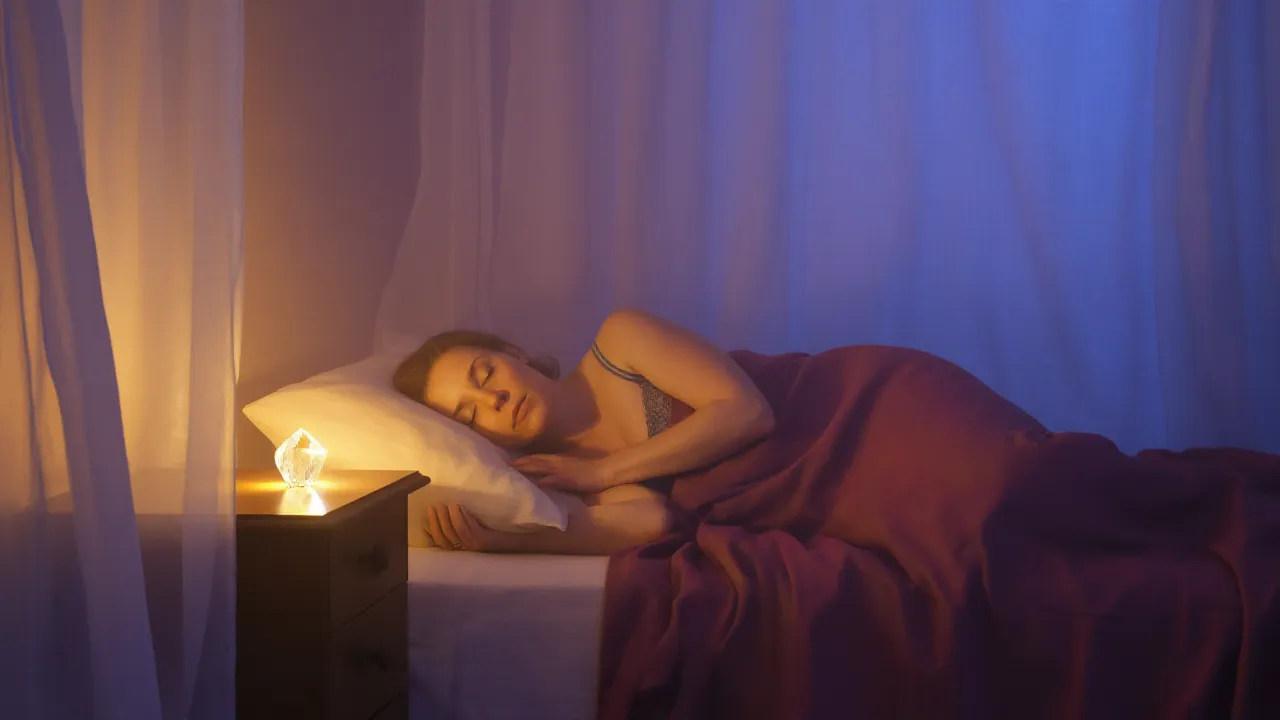
Your mind circles. The day replays. The clock reads 2 AM, and sleep feels like a door that will not open. You know that beautiful moment — when your mind finally quiets, your body releases, and you drift into that liminal space between waking and dreaming? For many people, that moment comes too late. Or never comes at all.
If this has been your experience, you are not alone. Millions of people spend their nights in a quiet struggle with their own restlessness. And for years, the available options have felt limited: pharmaceutical options that come with their own compromises, meditation practices that require years of training to master, white noise apps that interrupt your practice with ads or charge monthly fees for the same tracks.
But there is another option. One that bridges neuroscience and sacred practice. One that has been used by meditators for decades, now supported by research on how our brains work.
Binaural beats.
This guide walks you through the science, the frequencies, and the ritual — and when you are ready, we will show you how to find the kind of transparent, high-quality audio that actually supports your practice. What binaural beats are. How they work. Which frequencies serve sleep best. How to use them safely. And the questions you have been wondering about, answered honestly.
By the end, you will understand not just what binaural beats are, but how they might become part of your own nightly ceremony.
The Science
What Are Binaural Beats? (And How Does Your Brain Create Them?)
Your brain does something remarkable that you have never noticed.
Imagine this: your left ear hears a 200 Hz tone. Your right ear hears a 204 Hz tone. These frequencies are different — a 4 Hz difference between them. Your brain does not simply hear two separate sounds. Instead, it does something extraordinary. It perceives a third frequency that does not actually exist in the audio. This phantom frequency — this “binaural beat” — is exactly 4 Hz, the mathematical difference between the two tones.
This is not fiction. This is a documented neurological phenomenon. Your brain naturally creates a beat frequency whenever two slightly different tones play simultaneously in each ear.
Here is why this matters for your sleep:
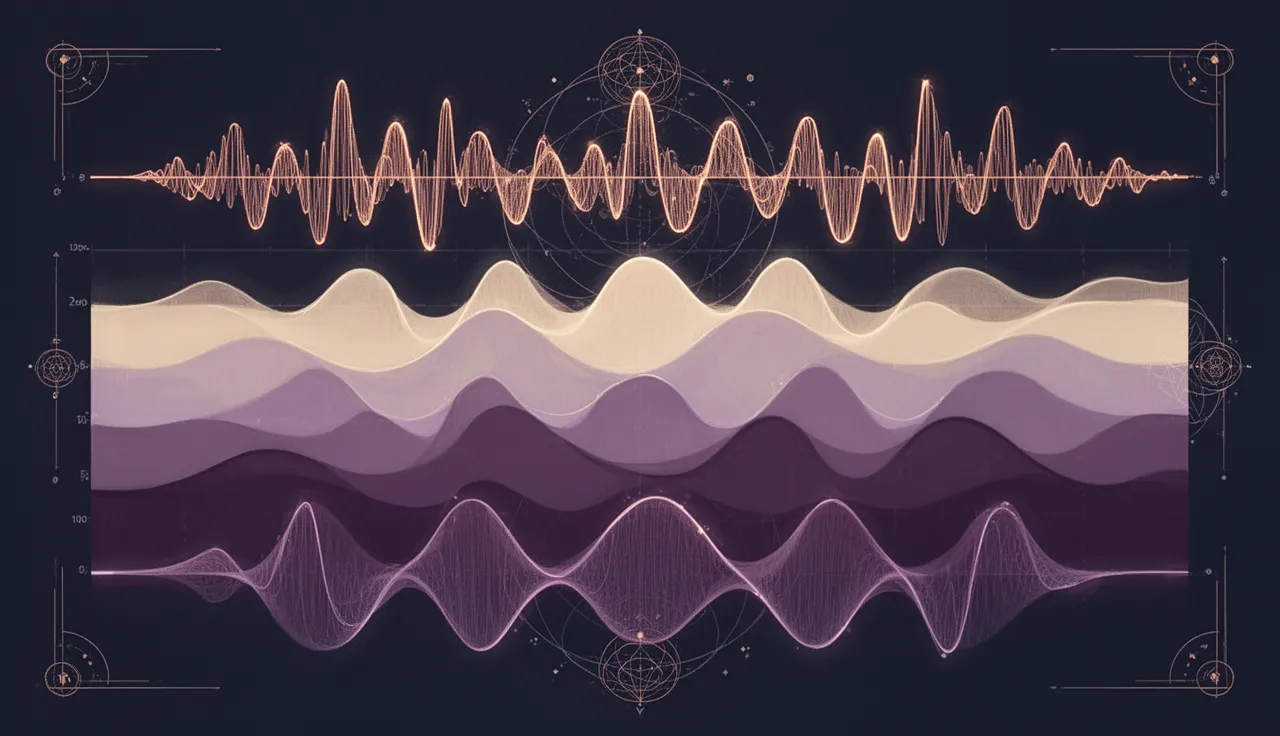
Your brain operates in different brainwave states depending on what you are doing. When you are awake, alert, and focused, your brain produces beta waves (13–30 Hz). When you are calm and meditative, you produce alpha waves (8–12 Hz). When you are in light sleep, you produce theta waves (4–8 Hz). And in the deepest, most restorative sleep, you produce delta waves (0.5–4 Hz).
For decades, meditators and yogis trained their minds to reach these slower brainwave states through years of dedicated practice. Binaural beats offer a complement to practice — not a shortcut, but a companion. They meet your brain where it is and gently invite it toward the state you seek. By creating a binaural beat in the delta or theta range, you gently invite your brainwaves to shift toward the state you seek.
When you listen to binaural beats through headphones, your brain naturally tends to synchronize with the beat frequency. This is called “brainwave entrainment.” Your brainwaves do not suddenly jump to match the binaural beat frequency — the shift is gentle, gradual, and invitation-based. Your brain follows the frequency the way a pendulum naturally swings into rhythm with another pendulum nearby.
For sleep, this means delta-range binaural beats (0.5–4 Hz) can invite your brainwaves into the same state your body enters during its deepest rest.
Why Frequencies Matter
The Sleep Science: Why These Frequencies Matter
To understand why certain frequencies support sleep, it helps to understand what happens in your brain during different sleep stages.
Stage 1 & 2 — Light Sleep (Theta Range, 4–8 Hz)
When you first begin to drift off, your brain shifts into theta waves. This is the threshold between waking and sleeping. Many people struggle here — this is when intrusive thoughts arrive, when the mind circles back to the day’s problems. Theta-range binaural beats (around 6–8 Hz) can ease this transition, gently inviting your nervous system to relax while your mind begins to let go.
Stage 3 & 4 — Deep Sleep (Delta Range, 0.5–4 Hz)
This is when true restoration happens. Your body releases growth hormone. Your immune system strengthens. Your brain consolidates memories. Your nervous system genuinely rests. Delta waves are the slowest, most profound brainwaves your brain produces. Creating a delta-range binaural beat (3–4 Hz is ideal for most people) creates an acoustic environment where your brain naturally wants to settle into this restorative state.
Why Binaural Beats Work Differently to Simple Soundscapes
You might wonder: why not just listen to a calming soundscape — rain, ocean waves, or ambient music? These are beautiful. Many people find them helpful. But they lack the specific brainwave invitation that binaural beats offer. A gentle rain recording does not directly communicate with your nervous system. It is soothing, but passive. A binaural beat actively invites your brainwaves to shift.
This is not to say rain sounds are inferior — they are simply doing something different. Many thoughtfully crafted sleep audio products layer binaural beats beneath ambient soundscapes. The binaural beat becomes the active ingredient, while the ambient sounds create a beautiful, soothing container.
Reference Guide
Best Frequencies for Sleep
Not all frequencies support sleep equally. Here is what the research and practice tell us:
For Falling Asleep (6–8 Hz — Theta Range)
- 6 Hz: Ideal for easing the transition between waking and sleeping
- 7–8 Hz: Supports light sleep and relaxation before deeper rest
- Best used for: the first 20–30 minutes of your bedtime ritual, or when your mind refuses to quiet down
For Deep Sleep (3–4 Hz — Delta Range)
- 3 Hz: The sweet spot for most people seeking deep, restorative sleep — corresponds to the deepest sleep stages
- 4 Hz: Slightly higher, still in delta range, can work well if 3 Hz feels too subtle
- Best used for: the main portion of your sleep session (30–60+ minutes)
| Frequency Range | Hz | Best For |
|---|---|---|
| Theta (light sleep transition) | 6–8 Hz | Quieting the racing mind, easing into rest |
| Low Theta | 5.5–6 Hz | Dreamlike states, deep relaxation |
| High Delta | 3.5–4 Hz | Deep sleep onset, those new to delta frequencies |
| Delta (deep restoration) | 2.5–3 Hz | Deep sleep, nervous system restoration |
| Deep Delta | 2 Hz | Extended sessions, chronic sleep support |
Advanced: some people layer frequencies — listening to 8 Hz theta for 15 minutes to ease into sleep, then switching to 3–4 Hz delta for the main session. This can be highly effective for those with racing minds.
These are the exact frequencies we used when designing the Sacred Sleep Collection — because we needed them for our own restless nights first. When you are ready to experience these frequencies yourself, knowing exactly what you are listening to matters.
Your Practice
How to Use Binaural Beats for Sleep: A Step-by-Step Ritual
Listening to binaural beats is simple. But creating a ritual around them makes them powerful.
Step 1: Create Your Sacred Space (5–10 minutes before sleep)
Before you put your headphones on, prepare your environment:
- Dim the lights. Ideally, use only candlelight or a soft lamp with warm bulbs.
- Close your bedroom door. Silence notifications on your phone.
- Set the temperature cool (65–68°F is ideal for sleep).
- Consider lighting a candle or a smudge stick if that resonates with you.
- If you journal, write a simple intention: I am safe. My body knows how to rest.
This preparation tells your nervous system that something intentional is beginning. Ritual is not luxury — it is how we communicate safety to our bodies.
Step 2: Use High-Quality Headphones (Essential)
Binaural beats require headphones. This is non-negotiable.
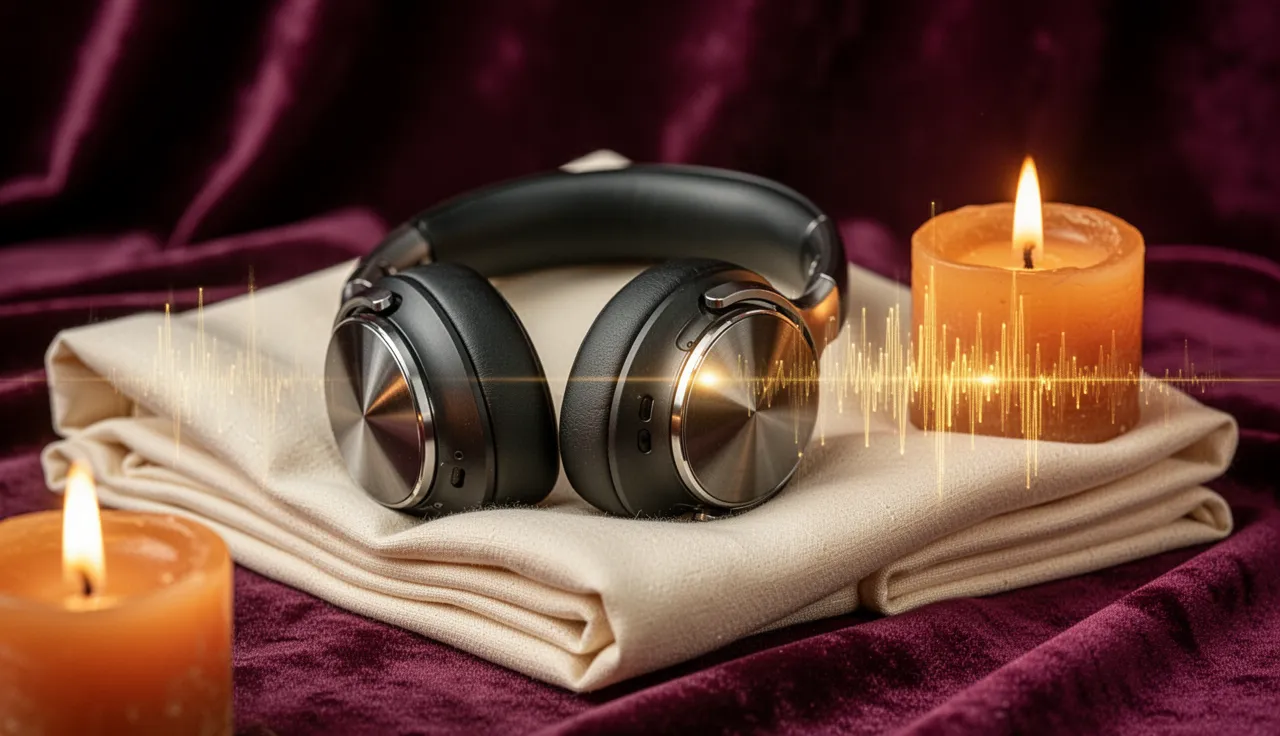
Binaural beats work because each ear receives a different frequency. If you listen through speakers, both ears hear both frequencies, and the binaural effect is lost. You need stereo headphones — comfortable enough to sleep in, with good passive noise isolation if possible.
You do not need expensive headphones. A comfortable pair of stereo headphones works beautifully. What matters is comfort and stereo separation.
Step 3: Start Your Audio (Lying Down, Eyes Closed)
When you are in bed, settled under your blankets:
- Put your headphones on.
- Play your binaural beats track.
- Close your eyes and let your body settle.
Do not try to “make” sleep happen. Your job is simply to listen and allow your body to do what it naturally does when given permission.
Step 4: Release Effort (The Step Most People Skip)
This is where many people stumble. They listen to the binaural beats and then anxiously monitor whether it is “working.” This vigilance keeps you awake.
Instead: let go. Let the frequency do its work. Your brain will synchronize with the binaural beat whether or not you consciously notice it happening. You will not hear a “beat” in the traditional sense. What you might notice is a gentle, subtle sense of your mind softening. The thoughts quieting. Your body becoming heavier.
If your mind wanders — which it will — gently return your attention to your breath. Not because distraction is failure, but because gentle, anchored attention creates the conditions where sleep can arrive.
Step 5: Let Sleep Come (Or Surrender to Resting)
Most people fall asleep before the binaural beats end. Some nights, you will be deeply asleep within 15 minutes. Other nights, it might take 30–45 minutes. Both are normal.
On nights when you struggle to fall asleep even with the binaural beats, that is also okay. You are still receiving the benefit of a deep-rest state. Rest is not the same as sleep, but it is restorative. Your body is still being supported.

Ready to Begin
Your Nightly Ceremony, Acoustic Space Included
The frequencies described in this guide — 6 Hz for the transition, 3 Hz for deep restoration — are the exact ones we built into the Sacred Sleep Collection. Not as a sales pitch, but because these are the frequencies that worked for our own practice first. The Opal Temple Sacred Sleep Collection was created because we needed exactly this for our own practice — four sleep frequencies, from gentle theta transitions to deep delta restoration, each paired with a complete Evening Ritual Guide.
Every Hz is fully documented. No hidden subliminals. No mystery. Instant download, yours to keep forever — no subscriptions, no monthly fees, no algorithm changes taking away what you already own.
Getting Results
Best Practices: What Works, What Does Not
What Works
- Listening consistently. Like any practice, binaural beats are most effective when used regularly. 3–4 nights per week as a baseline; nightly if you are working with persistent sleep difficulties.
- Using the same track each night. Your nervous system learns that “this sound means sleep.” Consistency builds the neural pathway. Many listeners tell us that after two weeks of nightly use, the ritual becomes automatic — the moment the headphones go on, the body already knows what comes next.
- Wearing headphones throughout the entire sleep session, or at minimum the first 30–45 minutes while your body is transitioning to deep sleep.
- Pairing binaural beats with other sleep-supportive practices: no screens 1 hour before bed, keeping your bedroom cool, limiting caffeine after 2 PM.
- When you own a track designed for this practice, consistency becomes effortless — no searching, no ads, no algorithm deciding what plays next.
What Does Not Work
- Listening without headphones. The binaural effect requires stereo separation.
- Playing binaural beats through your phone speaker while you scroll or read. Your attention needs to be on the listening experience, not divided.
- Expecting instant results the very first night. Brainwave entrainment is gentle. Give your body 3–5 nights of consistent listening before deciding whether binaural beats work for you.
- Using binaural beats as your only sleep tool while ignoring sleep hygiene basics. Frequency is one part of a whole-systems approach to rest.
- Changing tracks every night. Consistency is more powerful than novelty.
Now that you know what makes binaural beats effective — and what to avoid — the next step is finding a track built to these exact standards. The Sacred Sleep Collection was designed with every one of these principles in mind: consistent frequencies, full transparency, ritual context, and permanent ownership.
Important Considerations
Safety: What You Need to Know
Binaural beats are safe for most people. But there are important considerations to be aware of.
Who Should Consult a Healthcare Provider First
- People with a history of seizures or photosensitive epilepsy. Binaural beat frequencies can theoretically trigger seizure activity in sensitive individuals. Consult your healthcare provider before using.
- People with a pacemaker or other implanted medical devices. Some frequencies can interfere with certain devices. Check with your cardiologist or device manufacturer.
- Pregnant people should consult their healthcare provider, particularly regarding specific frequencies and duration.
- People with severe hearing loss may not benefit, as the frequency separation required for the binaural beat effect depends on hearing ability in both ears.
General Safety Guidelines
- Start with lower frequencies (3–4 Hz) at moderate listening volumes. You do not need loud audio for binaural beats to work.
- Do not drive or operate machinery while listening to sleep-range binaural beats. These frequencies are designed to support rest.
- Keep volume at a comfortable level — around 50–60 decibels, similar to a normal conversation. Loud binaural beats are not more effective; they are simply harsh.
- If you experience headaches, dizziness, or unusual sensations, stop using and consult a healthcare provider.
- Binaural beats are a tool for your spiritual and wellness practice, not a replacement for medical care. If you are struggling with a sleep disorder, work with a healthcare provider.
When used thoughtfully, binaural beats are one of the safest, most accessible tools for deepening your sleep ritual.
Common Questions
Frequently Asked Questions
Will binaural beats make me fall asleep instantly?
No. Binaural beats invite your nervous system toward rest — they do not force sleep. Most people notice a difference in falling asleep speed after 3–5 consistent nights. Some notice it immediately. Be patient with your body.
What if I have a partner who does not want to listen?
Binaural beats require headphones, so your partner can sleep unaffected. The audio is just for you. This is one advantage over shared sleep soundscapes.
Can I use binaural beats every night?
Yes. Many people incorporate them as part of their nightly ritual, the way they might make tea or light a candle. Regular use can be more effective than sporadic listening because your nervous system learns the association.
Which is better — 3 Hz or 4 Hz for sleep?
This is individual. Most people respond well to 3 Hz, which is deeper delta. Some people prefer 4 Hz, which is the upper edge of delta. Try both for 3 nights each and notice which feels more natural for your body.
Do binaural beats work without headphones?
No. The binaural beat effect requires stereo separation. Headphones are essential.
I fell asleep and missed the whole track. Does it matter?
Not at all. If you fell asleep, the binaural beats did exactly what you wanted. Falling asleep during a track is a sign of success, not a wasted session.
What if nothing happens the first night?
One night is not enough data. Give it 3–5 nights of consistent listening before deciding whether binaural beats work for your body. Your nervous system needs time to recognize and synchronize with the frequency pattern.
Are binaural beats the same as subliminal audio?
No. Binaural beats are about frequency entrainment — inviting your brainwaves to synchronize with a specific frequency. Subliminal audio involves hidden affirmations or messages beneath audible content. These are completely different things. Transparent, quality binaural beats contain no hidden subliminals — and any reputable seller will state this explicitly in their product documentation.
Can I use binaural beats if I have tinnitus?
Carefully. If you have tinnitus, binaural beats might sometimes make the ringing more noticeable, or they might help it recede. This is very individual. Start with gentle listening for short periods and notice your response. If binaural beats worsen your tinnitus, stop using them.
Honest Expectations
Moving Beyond the Myths: What Binaural Beats Can and Cannot Do
The market is flooded with inflated claims. “Binaural beats that cure insomnia.” “Frequencies that eliminate anxiety.” “This sound will transform your sleep forever.” This is not honest — and it does a disservice to tools that genuinely have something to offer.
Here is what binaural beats can actually do:
- Create an acoustic environment where your nervous system finds it easier to relax
- Gently invite your brainwaves toward slower frequencies associated with rest
- Deepen your sleep ritual and support a consistent bedtime practice
- Provide a tool that works with your own body’s natural ability to rest
- Offer an accessible alternative to pharmaceutical sleep aids or expensive subscription apps
Here is what they cannot do:
- Fix underlying sleep disorders (like sleep apnea or narcolepsy) without medical treatment
- Guarantee you will fall asleep
- Heal trauma or address the root causes of chronic insomnia without additional therapeutic support
- Replace good sleep hygiene: cool room, consistent schedule, limiting screens
- Work for everyone in exactly the same way
Binaural beats are a practice. Like meditation, like yoga, like journaling. And like any practice, the tools you use matter. Some nights they will profoundly support your rest. Other nights, you will need other tools. This is normal.
The Full Container
Building Your Sleep Ritual: Beyond Just the Audio
The most effective use of binaural beats is not about the frequency in isolation. It is about the ritual you build around it. The psychological container is as important as the frequency itself.
One Hour Before Bed
- No screens. No emails. No news.
- Dim the lights. Light a candle.
- Brew a caffeine-free tea — chamomile, passionflower, or tulsi are gentle options.
- If you journal: three sentences. What am I releasing today? What do I want to dream? What am I grateful for?
At Bedtime
- Make your bed a sacred space. Smooth your sheets. Arrange your pillow intentionally.
- Put on your headphones and press play on your binaural beats track.
- Set a clear intention: My body knows how to rest.
During the Listening
- Close your eyes.
- Release the need to “do” anything.
- Let yourself drift.
This ritual tells your nervous system something important: rest is sacred. Your sleep matters. I am creating safe, intentional space for my body to restore.
Buyer’s Guide
Choosing Your Binaural Beats Track: What to Look For
Not all binaural beats are created equal. Here is what distinguishes a quality, transparent product from one that is more interested in selling promises than supporting your practice.
Frequency Transparency
The product description should list the exact carrier frequency, the exact beat frequency, the brainwave range targeted, any ambient sounds included, and whether subliminals are present (quality products will explicitly state “none”). If a seller is vague about frequencies or claims “proprietary technology” they cannot disclose, be cautious.
Audio Quality
- The binaural beats should be subtle, not harsh or grinding-sounding
- The ambient soundscape (if included) should be pleasant and not distract from rest
- The overall mastering should be clean, well-balanced, and professionally crafted
Ritual Context
Quality sleep-specific binaural beat products include a guide explaining how to use them effectively, suggestions for creating your bedtime ritual, optional crystal or essential oil pairings for those drawn to those practices, and clear instructions on listening through headphones.
Honest Language
Look for language like: “designed for your sleep ritual”, “crafted to support rest”, “a tool for your evening practice.” Avoid sellers using language like “guarantees deep sleep”, “cures insomnia”, or “will work for everyone.”
This transparency standard is what we hold ourselves to at Opal Temple. Every track in the Sacred Sleep Collection comes with a full frequency documentation sheet — left ear carrier, right ear carrier, beat frequency, brainwave target, ambient layers, and an explicit statement that no subliminals are present. You know exactly what you are listening to.
Spec Spotlight — Sacred Sleep Sanctuary
Here is what full transparency looks like in practice. This is the complete specification sheet for one of our most popular sleep tracks:
| Specification | Value |
|---|---|
| Left Ear Carrier | 519 Hz |
| Right Ear Carrier | 521.5 Hz |
| Binaural Beat | 2.5 Hz (delta) |
| Brainwave Target | Delta — deepest sleep, nervous system restoration |
| Duration | 60 minutes |
| Ambient Layers | Gentle rain, crystal bowl resonance |
| Affirmations | None |
| Subliminals | None |
| Fade In / Fade Out | 8 seconds / 15 seconds |
| Format | MP3 320 kbps, instant download |
This is what transparency looks like. If a seller cannot provide this level of detail, ask yourself why.
Full Transparency · Every Purchase
Every Hz Documented
Every Opal Temple sleep track includes a complete specification sheet. No mystery ingredients. No hidden components. MP3 320 kbps, instant download, no subscription required.
Begin Tonight
Your Body Knows How to Rest
Your sleep matters. Your rest is sacred. And you deserve tools that honour both the science and the ritual of deep, restorative rest.
Binaural beats, used thoughtfully and consistently, can become a powerful part of your bedtime practice. They are not a magic solution, but they are a genuine, research-inspired tool that bridges neuroscience and sacred practice.
Wellness Disclaimer
Safety: Binaural beats require stereo headphones. Do not listen with a too high sound volume. Do not use while driving or operating machinery. If you have epilepsy, a seizure disorder, or a serious mental health condition, please consult your doctor before use. Full disclaimer →